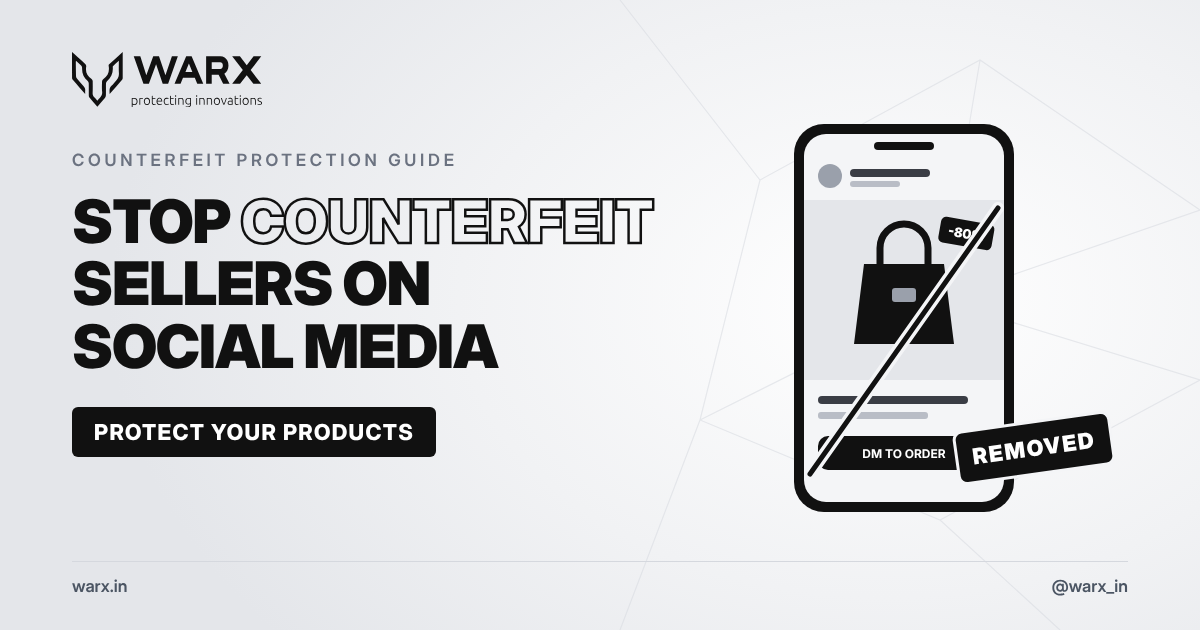
Counterfeit sellers no longer need a shop or a marketplace listing. A social media page, a few copied product photos and a "DM to order" button are enough. Fake products are now sold through Instagram pages, Facebook ads, WhatsApp catalogues and Telegram channels, often using the brand's own images. Customers who receive poor-quality fakes often blame the real brand. Social media counterfeiting is hard to track, but it can be found, removed and reduced.
How counterfeit sellers use social media
- Copied product photos: sellers use your official images, so their posts look genuine.
- "First copy" and "master copy" offers: fakes openly sold as near-identical copies.
- Huge discounts: prices far below retail, to attract quick orders.
- Paid ads: sponsored posts and ads that reach a large audience quickly.
- Orders through chat: buyers are asked to message on WhatsApp or Instagram, so sales happen outside platform checks.
- Cash on delivery and bank transfers: payments that are hard to trace or reverse.
Step 1: Find the sellers
- Search for your brand name, product names and common misspellings on Instagram, Facebook, Telegram and WhatsApp business directories.
- Search hashtags that combine your brand with words like "copy", "replica", "first copy" or "sale".
- Check public ad libraries, such as Meta's Ad Library, for ads using your brand name or product images.
- Use reverse image search to find pages using your official product photos.
Step 2: Collect evidence
- Save links to every page, post, ad and catalogue selling fake products.
- Take screenshots showing the product, price, seller name and contact details.
- Record phone numbers, payment details and delivery information.
- Where appropriate, and with legal advice, a test purchase can confirm the product is fake and reveal more about the seller.
Step 3: Report to the platforms
Most social media platforms have dedicated forms for brand owners to report counterfeit products and trademark misuse.
- Use the platform's intellectual property or counterfeit reporting forms, not just the standard report button.
- Report posts, ads, pages and catalogues together, so the whole operation is removed.
- Report WhatsApp and Telegram business accounts used to take orders.
- Include your trademark registration and clear evidence. Reports from the brand owner are handled faster.
Step 4: Go after repeat sellers
Counterfeit sellers often open new pages as soon as old ones are removed.
- Track phone numbers, payment details and images used across different pages, to link new pages to known sellers.
- Report repeat offenders so platforms can remove all their accounts.
- For large or organised sellers, work with lawyers and local authorities to act against the source.
Step 5: Help customers spot fakes
- List your official social media pages and authorised sellers on your website.
- Add authentication features, such as QR codes or holograms, that customers can check.
- Warn customers about common signs of fakes: very low prices, "DM to order" pages and requests for bank transfers.
- Make it easy for customers to report suspicious sellers to you.
Counterfeit protection checklist
- Registered trademarks in every market you sell in
- Regular monitoring of social media, ads and messaging apps
- Evidence collected before reporting
- Reports filed through brand-owner forms
- Repeat sellers tracked and reported
- Authentication features and customer education
How WarX stops social media counterfeiting
WarX monitors Instagram, Facebook, WhatsApp, Telegram, ads and online marketplaces for counterfeit versions of your products. We identify sellers, collect evidence, file brand-owner reports to remove pages, posts, ads and catalogues, and track repeat offenders across new accounts. A live dashboard shows every detection and removal, so you can see your brand being cleaned up across platforms.
Learn more about our counterfeit management services, or contact our team to report counterfeit sellers.
Frequently asked questions
Can I remove Instagram pages selling fake versions of my products?
Yes. Use Instagram's intellectual property reporting forms as the brand owner, with your trademark details and evidence. Platforms remove pages, posts and ads that sell counterfeit products.
What if the seller only takes orders on WhatsApp?
Report the WhatsApp business account, and report any social media pages or ads that send buyers to it. Save phone numbers and payment details to link the seller to other accounts.
Do I need a registered trademark to report counterfeit sellers?
A registered trademark makes reports much stronger and faster. Without one, you may still be able to report copied photos and content under copyright.
If this is already happening to a title or a brand you represent, talk to our counterfeit management services or Contact.